
Treatment information
Vaginal oestrogen
Estradiol or estriol, depending on the product Vaginal cream, gel, tablet, pessary or ring
Vaginal oestrogen treats menopause-related dryness and irritation locally, helping make everyday life and sex more comfortable. Your clinician can also discuss its role in preventing recurrent UTIs around or after menopause.
Explore the guide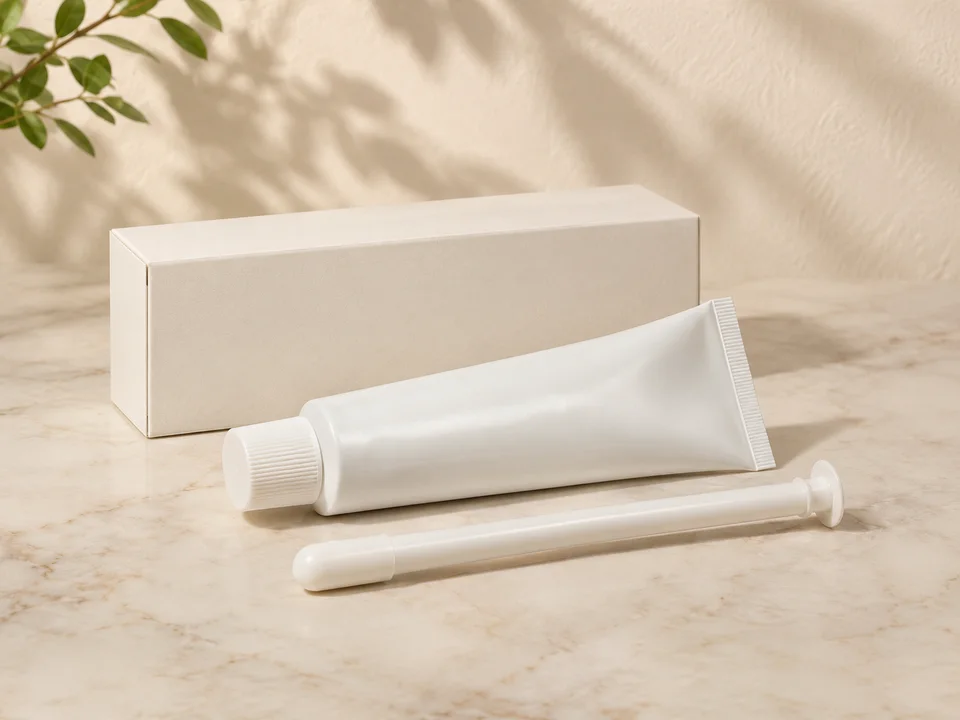
What it may help with
Relief from vaginal dryness, irritation and related discomfort.
What to expect
It can take up to three months to feel the full benefit. Persistent symptoms should be reviewed; any new UTI symptoms need assessment separately.
Benefits and response vary. Read the side effects and precautions alongside this information.
How it is used, what to expect and what to discuss with your clinician.
The essentials
Understand your
treatment options.
Vaginal oestrogen acts mainly in and around the vagina. It can help dryness, irritation and discomfort associated with menopause. It may also be considered as part of recurrent UTI prevention in perimenopause or after menopause. It is not an antibiotic and does not treat an active urinary infection.
How it is used
Use the selected product according to its instructions. Creams, tablets, pessaries and rings have different application methods and schedules; some begin with a more frequent phase before maintenance. A clinician or pharmacist can explain applicator use. Low-dose local treatment usually does not require an additional progestogen, even if you have a womb.
What to expect
Improvement can take several weeks, with the full benefit taking longer. Symptoms often return when treatment stops, so ongoing use and review may be appropriate. It can be used alongside moisturisers or lubricants, and sometimes alongside systemic HRT if local symptoms persist.
Other options
Vaginal moisturisers and lubricants are non-hormonal options. Recurrent UTIs may need urine testing, trigger-based advice or other preventive treatment. Systemic HRT addresses wider menopause symptoms but is not prescribed specifically to prevent UTIs. The most suitable approach depends on the symptoms being treated.
Prescribing information
Your assessment considers the evidence for recurrent UTI prevention and whether this approach suits you. Vaginal oestrogen is licensed for menopause-related vaginal symptoms; use specifically to prevent recurrent UTIs is off-label. Your clinician will discuss the potential benefits, side effects and alternatives. An active infection needs separate assessment.
Clear costs
The review.
Then the treatment.
We agree your route and cost before you pay.
Medicines, tests, dispensing and delivery are separate unless an agreed package includes them.
Menopause
Menopause consultation
£195Initial consultation · follow-up £125. Advice and any prescription preparation included.
UTI & cystitis
Recurrent UTI assessment
£99Initial consultation · follow-up £49. Advice and any prescription preparation included.
Detailed consultation fees cover assessment and advice even if no medicine is prescribed. No extra £25/£10 prescription fee applies to that consultation.
Choose our pharmacy partner or a pharmacy of your choice. Supply prices and availability are confirmed separately.
A little more detail
Your questions,
answered.
Will it help hot flushes?
Local vaginal oestrogen does not treat hot flushes or other whole-body menopause symptoms.
Is it contraception?
No. It does not prevent pregnancy.
Official information
Read the detail.
The leaflet supplied with your medicine contains the full instructions and safety information for that specific product.
Start with an assessment.
Discuss your concerns, explore the options and agree your next steps with your clinician.
Information updated 16 November 2026. Follow the directions supplied with your medicine and your clinician’s advice.