
Treatment information
Ivermectin cream
Ivermectin Cream
Ivermectin cream is used to reduce the inflamed bumps and spots of rosacea in adults.
Explore the guide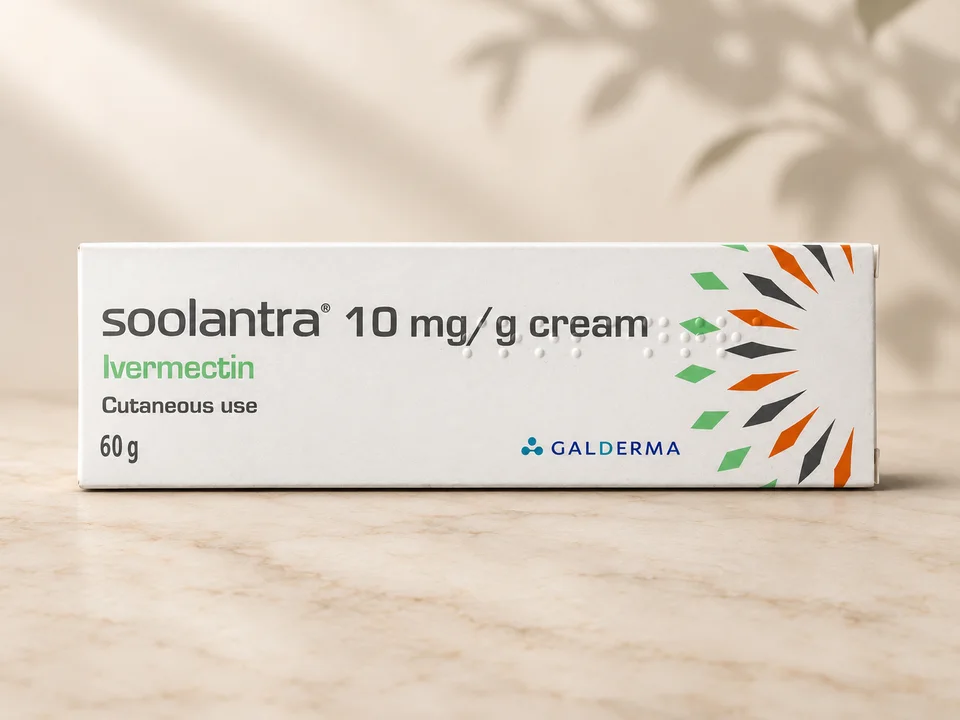
What it may help with
Fewer inflammatory rosacea bumps and pustules.
What to expect
Improvement may become noticeable over several weeks; reassess if there is no improvement after three months.
What studies found
Clear or almost clear at 12 weeks
38.4–40.1%
Two randomized trials included 1,371 adults with moderate/severe papulopustular rosacea. With once-daily Soolantra 1% cream, clear/almost clear ratings were 38.4% versus 11.6% with inactive cream in one trial and 40.1% versus 18.8% in the other.
This concerns inflammatory bumps and spots. It does not establish the same effect on flushing, visible blood vessels or every form of redness; some people improve without reaching clear/almost clear.
Soolantra 10 mg/g cream: UK product information, section 5.1 (opens in a new tab)Benefits and response vary. Read the side effects and precautions alongside this information.
How it is used, what to expect and what to discuss with your clinician.
The essentials
Understand your
treatment options.
Ivermectin 1% cream, commonly supplied as Soolantra, is used for papulopustular rosacea in adults. It is intended for inflammatory facial lesions, not every form of redness. Rosacea can involve several different features, including flushing and eye symptoms, so the treatment choice should follow an assessment of your own symptoms.
How it is used
Apply the prescribed amount in a thin layer over the agreed facial areas. Avoid the eyelids, eyes, lips and inside of the mouth or nose, and wash your hands afterwards. Once dry, suitable cosmetics may be used. Do not substitute oral or veterinary ivermectin for the prescribed skin cream.
What to expect
Improvement takes weeks. A brief early worsening can occur, but a strong or persistent reaction needs advice. If there is no improvement after three months, the product information recommends stopping and reviewing the plan. Rosacea can return, and any repeat course should fit your response and symptoms.
Other options
Other topical options include azelaic acid or metronidazole. Some people need an oral treatment or a separate approach for persistent redness. Gentle cleansing, suitable sun protection and identifying individual triggers are useful alongside medicines, without resorting to harsh scrubs or multiple active skincare products.
Clear costs
The review.
Then the treatment.
We agree your route and cost before you pay.
Medicines, tests, dispensing and delivery are separate unless an agreed package includes them.
Rosacea
Prescription-only request
£25New or repeat request. £10 for each additional medicine on the same prescription, if suitable and you proceed.
Rosacea
Complex skin consultation
£79For a fuller review · follow-up £39. The route and cost are agreed first.
Detailed consultation fees cover assessment and advice even if no medicine is prescribed. No extra £25/£10 prescription fee applies to that consultation.
Choose our pharmacy partner or a pharmacy of your choice. Supply prices and availability are confirmed separately.
A little more detail
Your questions,
answered.
Is this a treatment for all facial redness?
No. It is intended for the inflammatory lesions of rosacea; persistent flushing or visible vessels may need another approach.
Can I apply it to my eyelids?
No. Keep it away from eyelids and eyes, and ask for an eye assessment if symptoms involve those areas.
Official information
Read the detail.
The leaflet supplied with your medicine contains the full instructions and safety information for that specific product.
Start with an assessment.
Discuss your concerns, explore the options and agree your next steps with your clinician.
Information updated 16 November 2026. Follow the directions supplied with your medicine and your clinician’s advice.